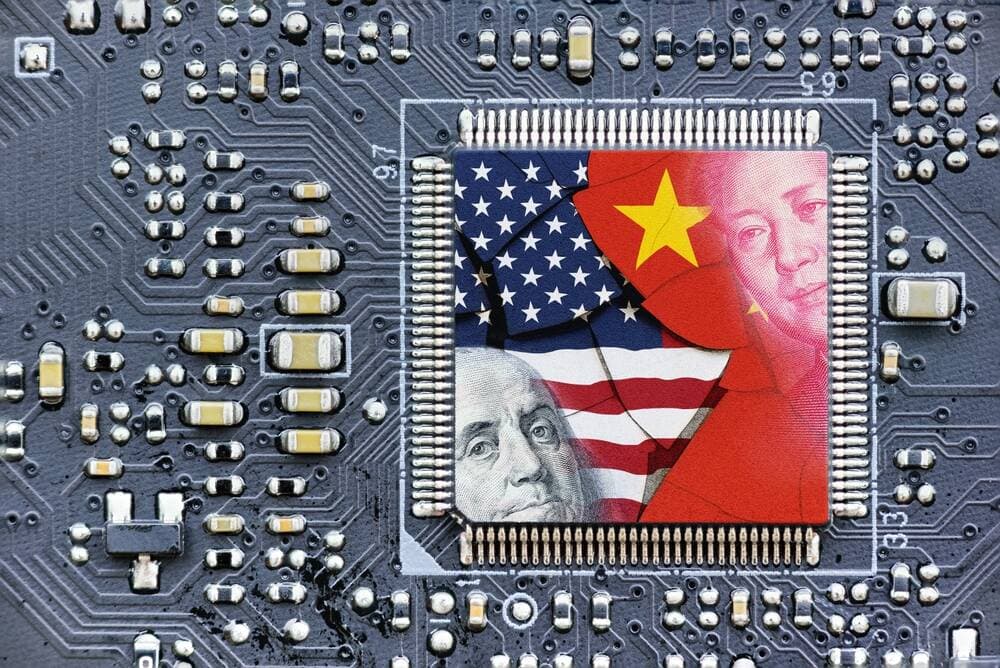
Washington's escalating tech war with China just ratcheted up a few notches. A bipartisan push in Congress to restrict semiconductor equipment sales to China signals a potential decoupling of the world's two largest economies – with collateral damage for companies caught in the crossfire.
The Push for a Blanket Ban
The current US strategy focuses on limiting sales of semiconductor equipment to specific Chinese entities deemed a national security risk. Lawmakers on both sides of the aisle are now advocating for a far more aggressive approach: a total embargo on selling advanced chipmaking tools to any company within China. This move reflects growing anxiety about China's ambition to dominate the semiconductor industry.The argument is simple: even if certain companies are blacklisted, the risk remains that the technology will eventually find its way into the hands of the Chinese military or state-sponsored entities. By cutting off access to the necessary tools altogether, the US hopes to cripple China's domestic chip production capabilities for the foreseeable future. This ban encompasses equipment used for producing advanced semiconductors – likely referring to chips manufactured using processes of 14nm (nanometers) or below.
The Stakes for Semiconductor Companies
A complete ban would have massive repercussions for global semiconductor equipment manufacturers. Companies like Applied Materials, Lam Research, and ASML (a Dutch firm with significant US ties) rely on China as a major market. Losing access to that market would undoubtedly impact their bottom lines. Moreover, it creates a difficult choice for these companies, as any perceived alignment with China could jeopardize their access to US technology and components.This proposed ban is not just about restricting sales; it’s also about forcing a choice. The US is sending a clear signal that companies must choose sides. Compliance with US export controls is no longer enough, a lack of public support for the US position could result in restrictions on accessing US components vital for the manufacture of their own equipment.
The "De-Coupling" Debate
This situation underscores the growing debate surrounding the "de-coupling" of the US and Chinese economies. The idea is that increased competition and national security concerns necessitate a separation of strategic industries. Semiconductors are at the heart of this debate, as they are essential for everything from smartphones and computers to weapons systems and artificial intelligence. A full-blown ban on semiconductor equipment sales would be a major step towards this de-coupling, with uncertain consequences for global trade and technological innovation. The effect could be to encourage China to accelerate its domestic development of such equipment – and perhaps, at lower standards than currently available.What's Next
- The Trump administration's response to the Congressional pressure will be crucial. Will they adopt a complete ban, or stick with the current targeted approach?
- Keep an eye on how European and Asian governments respond. The US needs its allies on board to make the ban effective.
- The impact of the US elections in November could also shift the trajectory of these policies.
Why It Matters
- This is a high-stakes geopolitical struggle with implications for the future of technological supremacy.
- A ban would likely slow down China's progress in advanced chip manufacturing, potentially giving the US and its allies a competitive advantage.
- Global semiconductor companies face significant financial risks and strategic choices.
- The situation highlights the increasing weaponization of technology in international relations.
- Ultimately, consumers could see higher prices and reduced access to cutting-edge electronics if supply chains are disrupted.
Source: The Register
Disclosure: This article is for informational purposes only.