
Back to Articles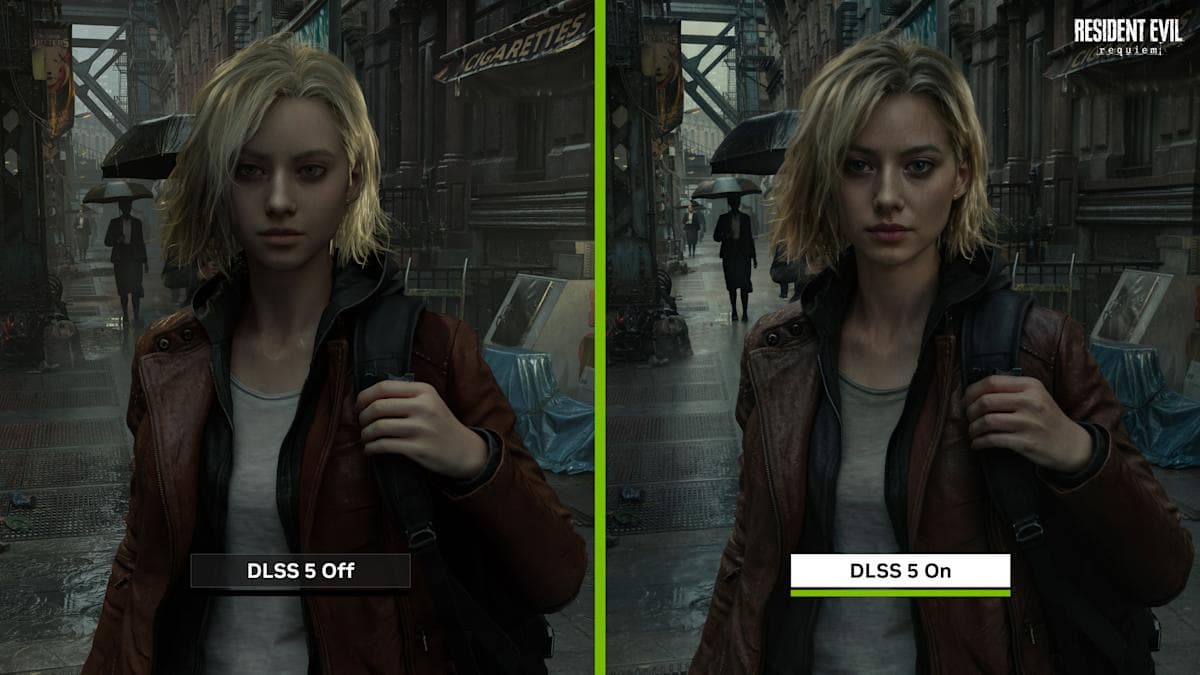

NVIDIA unveiled its next-generation DLSS 5 technology, claiming it will deliver "photoreal" image quality through a real-time neural rendering model arriving this fall. This advancement, showcased at the GTC 2026 keynote, aims to infuse game pixels with photoreal lighting and materials, according to NVIDIA Newsroom. However, the technology immediately sparked debate among internet users who argue it over-processes images, moving them away from the original game's aesthetic.
NVIDIA claims DLSS 5 will deliver 'photoreal' image quality with AI this fall
AI Overview
- •NVIDIA's DLSS 5 utilizes a real-time neural rendering model.
- •It promises "photoreal" lighting and materials in games this fall.
- •Critics claim DLSS 5 over-processes images, altering original aesthetics.
- •NVIDIA maintains developers retain artistic control over effects.
What This Means For You
1
For Game Developers
Explore DLSS 5's developer tools carefully to understand its "artistic control" features. Integrate it to enhance visual fidelity while preserving your unique game aesthetic. For Gamers: Evaluate DLSS 5's visual impact on a game-by-game basis. Look for comparisons against original visuals or previous DLSS versions to judge if the "photoreal" effects align with your preferences or if they alter the intended art style too much. For Tech Enthusiasts: Monitor the integration of DLSS 5 into new titles this fall. Pay close attention to how the generative AI model handles diverse art styles and whether it truly offers "Hollywood-like quality" without compromising artistic vision. Frequently Asked Questions What is NVIDIA DLSS 5? NVIDIA DLSS 5 is an advanced AI-powered upscaling technology that uses a real-time neural rendering model to generate photorealistic lighting and materials in video game graphics, aiming for enhanced visual fidelity. When will DLSS 5 be available? NVIDIA announced that DLSS 5 will be released and available in upcoming games sometime in Fall 2026. Specific titles like Resident Evil: Requiem are expected to feature the technology. Why are some internet users criticizing DLSS 5? Critics argue that DLSS 5's AI upscaling can "over-process" images, making them look artificial or deviating from a game's original art style. Concerns center on the AI potentially imposing a generic "photoreal" aesthetic. Research Sources
FAQFrequently Asked Questions
NVIDIA DLSS 5 is the next generation of NVIDIA's Deep Learning Super Sampling technology, designed to deliver photorealistic image quality in games using a real-time neural rendering model. It enhances game visuals by infusing pixels with photoreal lighting and materials, operating at resolutions up to 4K. NVIDIA positions DLSS 5 as a significant leap toward achieving "Hollywood-like quality" for real-time rendering.
NVIDIA DLSS 5 is expected to be available in the fall. It was unveiled at GTC 2026, with demos showcasing its capabilities in games like *Resident Evil: Requiem*, *Hogwarts Legacy*, and *Starfield*.
Critics argue that DLSS 5 over-processes images, potentially altering the original game's artistic intent. This concern stems from the AI upscaling adding detail that may deviate from the game's intended character designs and visual style, potentially imposing an "AI beauty standard."
Yes, NVIDIA states that developers retain artistic control over DLSS 5's effects. According to NVIDIA's Jacob Freeman, developers can adjust DLSS 5's settings to ensure the technology maintains the game's original aesthetic.
Companies Mentioned
Sources NVIDIA claims DLSS 5 will deliver 'photoreal' image quality with AI this fall - Engadget
 NVIDIA DLSS 5 Delivers AI-Powered Breakthrough in Visual Fidelity for Games - NVIDIA Newsroom
 NVIDIA's AI upscaling technology 'DLSS 5' is being mocked by internet users for over-processing images, making them look far removed from reality. - GIGAZINE
 DLSS 5 clearly overwrites game characters with AI beauty standards, but Nvidia says devs have 'artistic control' - PC Gamer
NVIDIA claims DLSS 5 will deliver 'photoreal' image quality with AI this fall - EngadgetNVIDIA DLSS 5 Delivers AI-Powered Breakthrough in Visual Fidelity for Games - NVIDIA NewsroomNVIDIA's AI upscaling technology 'DLSS 5' is being mocked by internet users for over-processing images, making them look far removed from reality. - GIGAZINEDLSS 5 clearly overwrites game characters with AI beauty standards, but Nvidia says devs have 'artistic control' - PC GamerRelated Articles
More insights on trending topics and technology

Design
3 min readFigma Make: Master Builds with Context & Control

AI
3 min readAce BI Engineering: 30 AI Era Interview Questions

AI
3 min readA Developer Cut Claude's Token Use by 75% — With Broken English

AI
3 min readGemma 4 Powers Agentic AI at the Edge

AI
4 min readBeat Claude Caps: 4 Habits for Limitless AI Use
GitHub
3 min readMicrosoft Unleashes VibeVoice: Open-Source Frontier Voice AI

Technology
3 min readMercor Eyes Your Past Work to Train AI

Consumer Tech
4 min read