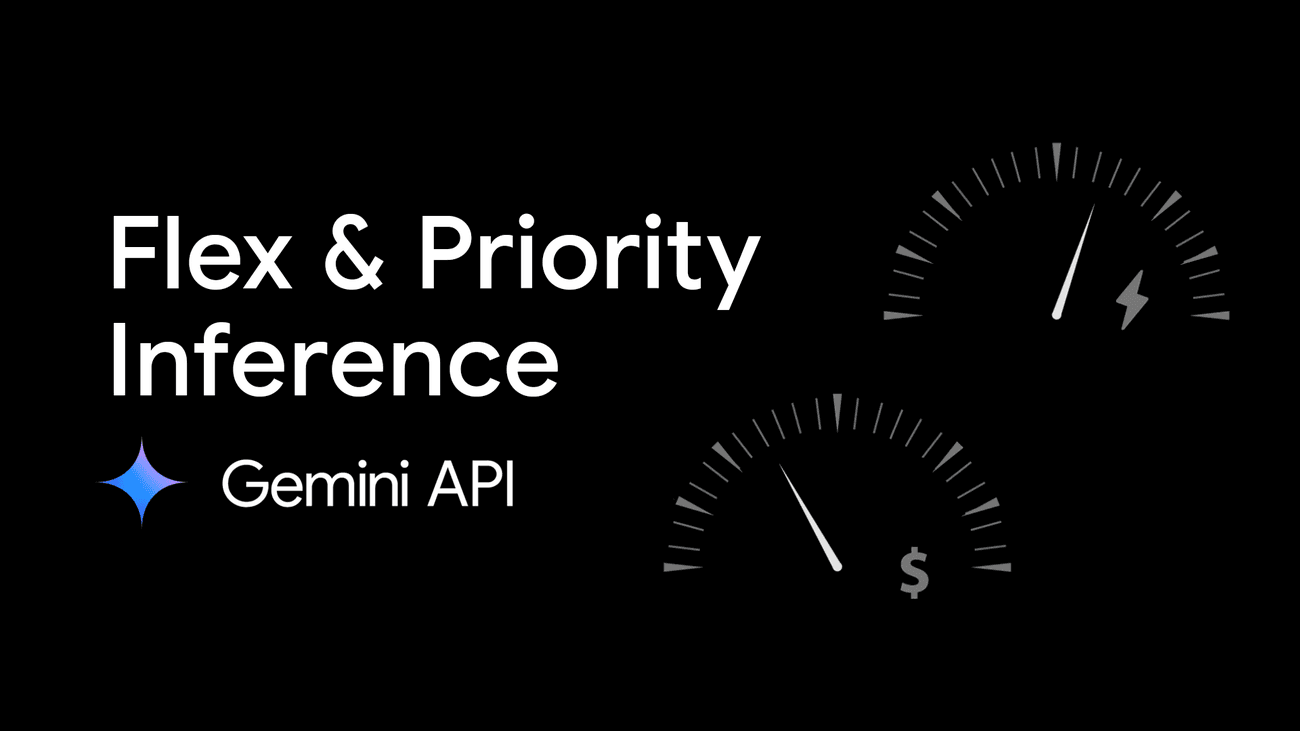

The introduction of Flex and Priority tiers directly addresses this architectural complexity Google stated. Developers can now route background jobs to the Flex tier and interactive jobs to the Priority tier, both utilizing standard synchronous endpoints. This approach streamlines development, removing the need to manage input/output files or poll for job completion, while still delivering the economic and performance benefits of specialized processing.
The Priority Inference tier provides the highest level of assurance for critical applications, ensuring important traffic avoids preemption even during peak platform usage. Priority requests receive maximum criticality, leading to enhanced reliability. A crucial feature is its graceful downgrade mechanism: if traffic exceeds Priority limits, overflow requests automatically shift to the Standard tier instead of failing, maintaining application uptime. The API response also transparently indicates which tier served the request, offering full visibility into performance and billing. Priority inference is available to users with Tier 2/3 paid projects for `GenerateContent` and `Interactions API` endpoints.
The refined tier system in the Gemini API signals a clear strategic direction: Google intends to make advanced AI development more accessible and economically viable for a broader range of applications. By providing granular control over inference costs and reliability, the company empowers developers to optimize resource allocation more effectively. This shift is particularly relevant as new, resource-intensive AI models emerge. For instance, Google's Veo 3.1 Lite, its "most cost-effective video model," offers the same generation speed as Veo 3.1 Fast at less than half the cost, according to 9to5Google. This model is already integrated into products like YouTube Shorts and Google Photos, demonstrating the real-world benefits of balancing performance with cost.
The ability to leverage specific tiers like Flex for developing applications with models like Veo 3.1 Lite, which now supports audio within videos and is accessible through the paid tier of the Gemini API CNET, creates a clearer pathway for innovation. Developers can build sophisticated features that require video generation or complex agentic "thinking" without incurring prohibitive costs or compromising on the reliability of user-facing components. This unified approach simplifies architectural decisions and reduces engineering overhead, fostering faster iteration and deployment of AI-powered services.
More insights on trending topics and technology




Google has introduced two new service tiers for its Gemini API: Flex and Priority. These tiers allow developers to fine-tune the balance between cost efficiency and application reliability for evolving AI workflows.
The new Flex and Priority tiers simplify managing diverse AI tasks by unifying synchronous inference under a single interface, eliminating the complexities of traditional asynchronous job management. Developers can now scale innovation for 50% less or ensure peak performance for essential services.
Flex Inference is a cost-optimized tier for the Gemini API, offering a 50% price reduction compared to the Standard API. It is designed for latency-tolerant background tasks such as CRM updates or research simulations, simplifying implementation with a synchronous interface.
Priority Inference provides the highest level of assurance for critical applications, ensuring important traffic avoids preemption even during peak platform usage. It features a graceful downgrade mechanism where overflow requests automatically shift to the Standard tier instead of failing, maintaining application uptime.